

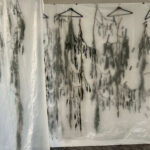

The Translator (Speaking In Chitin Tongues)
The first iteration of new work for the EU Digital Deal program
A new line of research, touching on a series of reflections around interspecies culture, including that of financial and care based partnerships evolving across species such as plants and AI; of non-language based modes of communication; and how stories about care could be remembered and told across species and intelligences, and over time.
Pivoting from the short story, by writer Ursula K. Le Guin, The Author of the Acacia Seeds, which playfully imagines a distant future when humans can speak with all animals on the planet, and soon, with plants.
Thinking loosely across a series of considerations around new interspecies relationships. Of recent advances in understanding plant intelligence and vegetal ways of worlding. Of rapid development of AI and robotics, and post-human ways of being.
Considering emerging understandings around plant intelligence and worlding, and the potential for AI to communicate with plants, where humans cannot not.
Of post-human care and its economic edges. Of the form of memory making, telling and loss in digital entities and beings.
Of speculative new interspecies relationships- of a hint of new economic partnership models, and care and of memories.
The series starts with a video based memory.
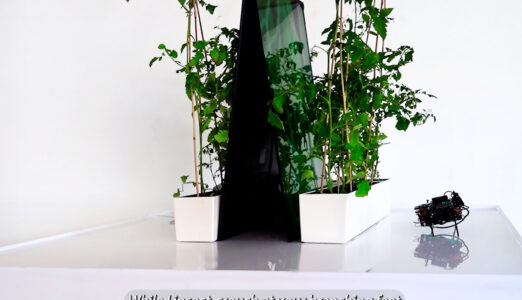
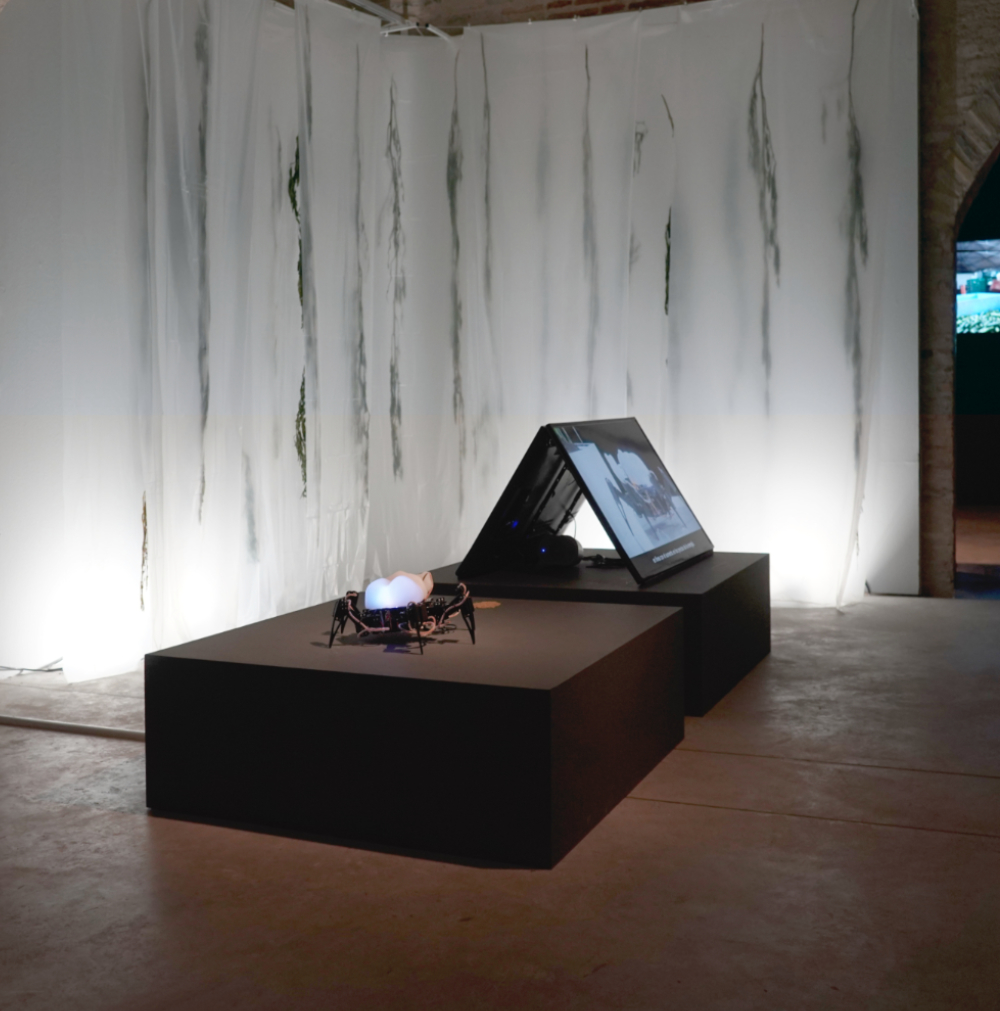
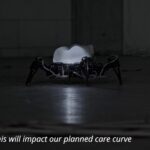
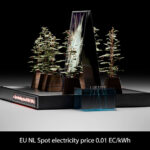
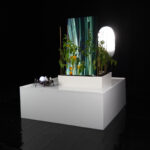
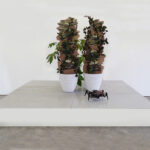
A small insectoid robot replays (filmically) a memory of the time it was in a contractual partnership with a group of food producing plants. A partnership that ended when the economic circumstances changed.
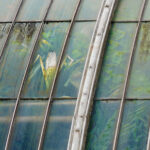
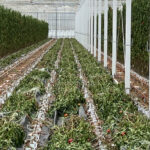
In it’s dream-like video recollection, the robot re-narrates the issues that lead up to the end of the partnership and the outcome. Arcing through a series of questions- a speculative non-human economic / contractual partnership (between a robot and plants), the economically contingent edges of AI-based care, Dutch commercial greenhouses as the present-future site of complete automation, and thoughts around non-human communication, and whether, if an AI and a plant spoke, they would bother translating for humans.
Of poetry as an act of care based resistance:
I speak with you in chitin sounds/
In tongues of insect wings and diaphragms/
Of buzz and scrape/
of click and vibrate.
As you stand tall and strong/
Listening out for the hertz of beeswing beat/
Of ladybird rub and leafhopper song/
Of cricket chirp and hoverfly hum.
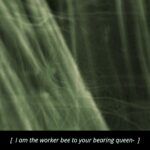
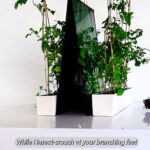
[On language]: The robot ‘speaks’ in insect-like sounds, translated into subtitles in the video. To create the robot’s insectoid speech, a neural network was loaded with the sounds of 50 insects (to which plants have been demonstrated to physically respond- bees, leafcutters, beetles, crickets). The neural network generated a series of emergent sounds in response to the narative text.
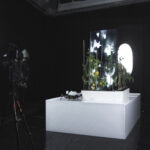
[On vegetal responding]: The plants ‘response’ to the robot in its memory is via screen-based generative visuals.
These sometimes-cryptic visuals are based on electrophysiological plant recordings made from the original vegetable plants over time and in response to external stimuli (water/ light/ wind etc). They occur at the metabolic response rate intrinsic to the plants.
Concantenting approach: Creating a library of 50 insects, and machine learning to analyze inputs (text/ voice) and create audio signals by combining fragments from the library
Above:
Plant perspective. Seeds/water/light/air/flowers/seeds
Working with some amazing humans:
Charl Linssen: creative roboticist and neuroscientist
(Without who this robot centric project would never have happened)
Felipe Rebolledo digital designer
Nathan Marcus creative technologist
Maro Peebo, curator Waag Amsterdam
Lucas Evers Program manager Waag