RESEARCH in progress:
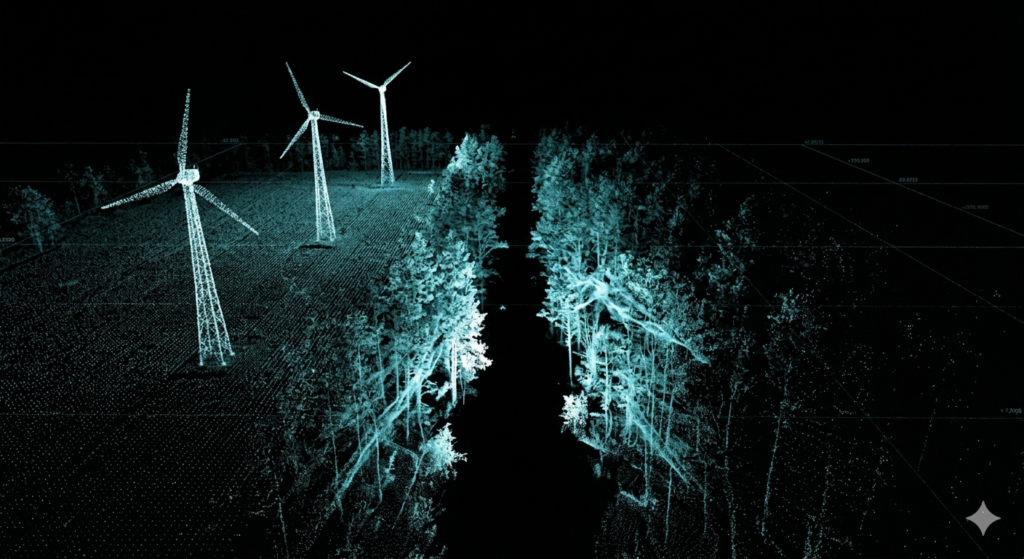
Endangered microbats in northern Europe appear to be singing to wind turbines. Nobody knows why, but new scientific research indicates an emergent (frequently fatal) behavior, possibly part of males’ mating song ritual; raising so many questions. Who knew that bats sing? Are they actually utilizing the windturbines? Or speculatively, instrumentalizing them for their songs?
This project seeks to weave a digital hybrid storytelling and song-singing entering from this story of small migratory insectivorous bats that sing with wind turbines. A post-human story of emergent animal utilization of human structures; of wonderment in expanded, other-than-human worlding, an optimistic sonic and visual attunement across species.
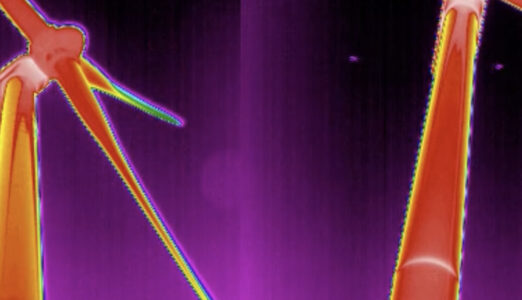
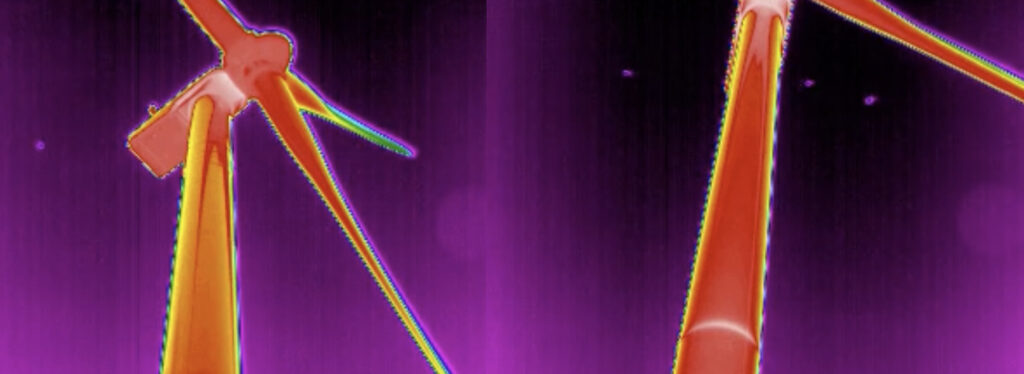
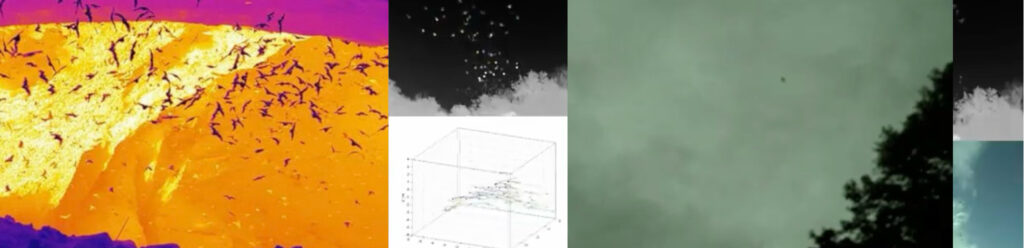
Heat camera footage of microbats circling wind turbines.
Bats seem to be all but invisible- we cannot hear and rarely see them, yet we fear and ‘other’ them, from miscast-myths and pandemic risks.
Keystone ecological species for future warming climates, these small insectiverous bats significantly control insect and vermin populations. They navigate, communicate and worldbuild using sound, translated to a ‘vision-like’ spatial perception, at frequencies above human hearing. A fascinating story fit for imaginative new-media translation to immersive visual and sound work
Video: Experimenting with sonic-visual intersections. Bat sonics are processed in the visual cortex as well as sonic cortex indicating that they see-hear sound.
Philosopher Thomas Nagel’s 1974 essay “What Is It Like to Be a Bat?” argues that bats’ ways of worldbuilding (based in receptive sonics rather than ocular absorption of light) was so different to human consciousness that we could never understand them.
This project is centered around the story of microbats; partly because they are threatened, poorly understood, yet ecologically important, and partly because they experience the world in such a radically different way to us.
How can digital media translate this hyperspectral worlding to something that humans can understand? Can new media technologies open a window to translate this?
To ask- through new media; can we open to ideas around other-than-human ways of knowing and worlding? As post-human philosopher Rosi Braidotti says; of “we-are-(all)-in-this-together-but-we-are-not-one-and-the-same” scale of worlding.
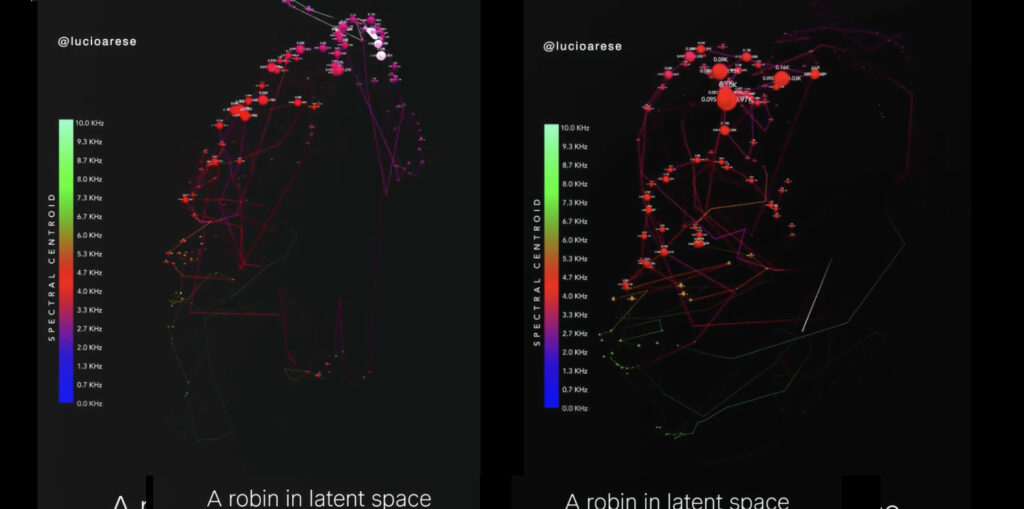
Can ultrasonic sound be translated to colour and human-range sound? An experiment with Gemini text prompt and scientists reccordings of bat songs.